
If You Don't Change Anything, You Don't Change Anything

As a nutritionist, my focus is helping women in their 40s and 50s navigate body composition changes, declining energy, stubborn weight gain, and the hormonal shifts that come with perimenopause and menopause.
But here's the truth: I'm not immune to those changes myself. I'll be turning 44 this year, and lately I've been noticing something. My exercise routine—the one I've followed consistently for years—just isn't making me feel my best anymore.
For years, my workout schedule looked something like this:
Three 30-minute strength workouts each week (lower body, upper body, full body, or a Bike Bootcamp)
Two HIIT cycling workouts
A weekend cycle, run, or bootcamp
Yoga or Pilates on Sundays (and often Mondays and Fridays too)
Two 30-minute walks every day (a habit I'm definitely keeping!)
On paper, it sounds great. And honestly, it was great—for a while. But recently, my body started sending me some signals. I felt exhausted. Overworked. Puffy. Inflamed. My clothes were fitting tighter despite doing "all the right things." I knew something had to change.
The Hardest Part? Letting Go of What Used to Work
It's funny how attached we become to routines.
I was comfortable with my workouts because they were familiar. I knew exactly what to expect. I knew how many calories I'd burn. I knew how sweaty I'd get. But if I'm being honest, my strength workouts had become more about moving through the motions than building muscle.
I was choosing weights I could comfortably handle. I was focusing on keeping my heart rate elevated. I was chasing calorie burn instead of progressive overload. And deep down, I knew it.
Making a change felt scary. What if I gained weight? What if I couldn't lift heavier weights?
What if I wasn't strong enough?
Those thoughts sound irrational coming from a nutrition professional, but they're real. They're the same fears I hear from clients every day.
My First Shift: Training for Strength, Not Sweat
This week, I decided to make a change.
I swapped one of my HIIT workouts for another strength session.
I still start my Peloton app every day (I'm not losing that streak!), but instead of following a Peloton strength class, I began creating my own workouts.
Over the past year, I've been working through the CFES Fitness Knowledge home study course, and it felt like the right time to put that knowledge into practice.
I started incorporating:
Proper warm-up sets
Three working sets
A target range of 8–12 reps
Weights that make the last few reps genuinely challenging
And something surprising happened. I realized I was capable of lifting heavier than I thought. The soreness I felt the next day—a feeling I hadn't experienced in quite some time—told me I was finally giving my muscles a reason to adapt.
My New Mindset
I'm shifting away from:
Chasing calorie burn
Measuring workout success by sweat
Constantly trying to elevate my heart rate
And moving toward:
Progressive overload
Building muscle
Recovering properly
Resting muscle groups so I can perform at my best
More strength-focused training
More low-impact cardio
Don't get me wrong—cardio is still important. I love a good HIIT sweat session. It's great for cardiovascular health and overall longevity. But more isn't always better. Especially during perimenopause, when our bodies can become less resilient to chronic stress.
My Second Shift: Fueling for Muscle
This one is humbling to admit. Because as a nutritionist, I know better. But knowing and doing aren't always the same thing. Like many women, I grew up in a culture that taught us to fear calories and carbohydrates. Somewhere along the way, I found myself slipping back into those habits.
Protein? Great.
Healthy fats? No problem.
But carbohydrates?
I was often avoiding them because of the calories. On busy weekends, I'd sometimes rely too heavily on protein bars and protein shakes instead of balanced meals. Not because I thought it was ideal.
Simply because it was convenient. And it was happening more often than I'd like to admit.
If I truly want to build muscle, recover properly, and support my metabolism, I need to fuel accordingly.
That means intentionally adding quality carbohydrates like:
Chickpeas
Lentils
Black beans
Wild rice
Millet
Sweet potatoes
Because carbohydrates aren't the enemy. They're fuel. And muscle-building requires fuel.
One of my favorite ways to make this easy is through meal prep. I've started adding beans and lentils to my grassfed ground beef, and ground turkey.
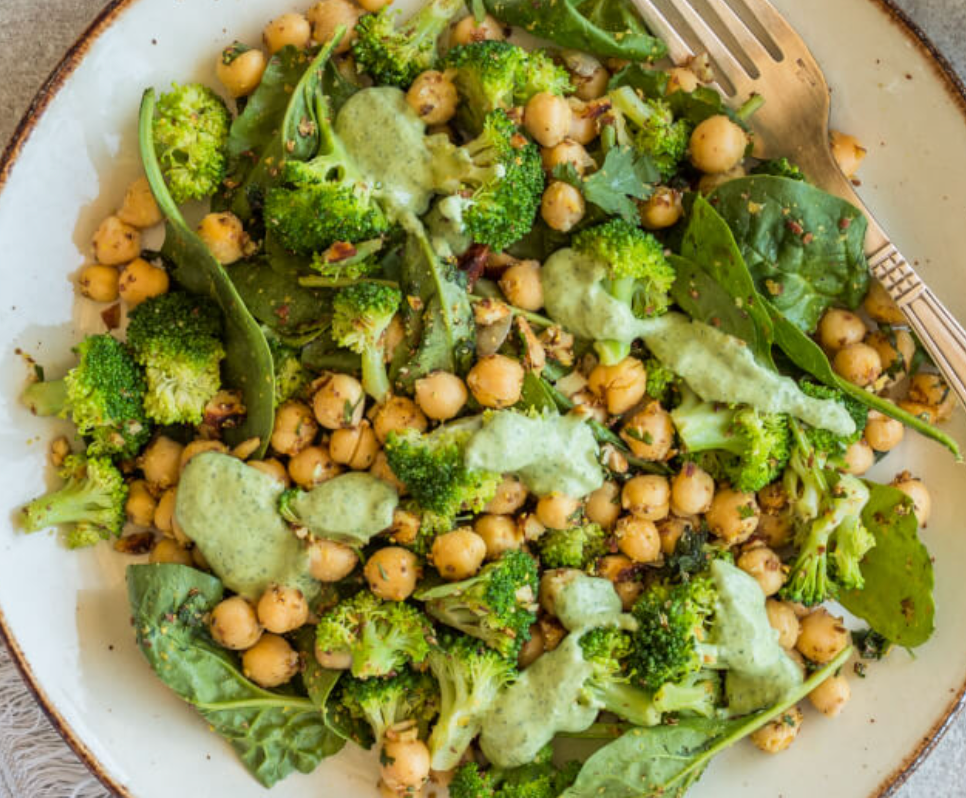
My go-to summer salad right now is a Broccoli & Chickpea Salad (recipe below!) packed with fiber, healthy fats, plant diversity, and the carbohydrates my body actually needs.
A Note About Calories
Many women are still trying to build muscle while eating 1,200–1,500 calories per day.
The reality?
That's often not enough. I know that statement goes against decades of diet culture messaging.
But muscle requires energy. Recovery requires energy. A healthy metabolism requires energy.
Of course, this works best when we also maintain balance in the evenings and on weekends.
That means:
Watching late-night snacking
Limiting alcohol intake
Closing the kitchen one to two hours before bed
Creating consistency seven days a week, not just Monday through Friday
Why This Matters More Than Ever
As women age, we naturally lose muscle mass.
At the same time, declining estrogen makes it harder to build and maintain muscle.
Which means we can't keep approaching exercise the same way we did in our 20s and 30s.
We have to be willing to evolve. We have to challenge ourselves. We have to train harder—but smarter. And sometimes that means replacing a 60-minute sweat-fest with a "boring" 35-45 minute strength workout.
But I found out this week...
There's nothing boring about feeling stronger.
Nothing boring about increasing your weights.
Nothing boring about seeing muscle definition emerge.
Nothing boring about building a body that supports you for decades to come.
My Commitment
I've only just started making these changes. I don't have dramatic before-and-after photos.
I don't have a six-month success story. Yet. But I wanted to share this journey in real time because I know so many women are standing exactly where I was a few weeks ago. Doing all the things.
Working hard. Wondering why their body isn't responding the way it used to. If that's you, maybe the answer isn't doing more. Maybe the answer is doing something different. I'll continue sharing updates as I go.
The wins.
The challenges.
The lessons.
And hopefully, I'll inspire you to take the plunge into a more strength-focused approach too.
Because my goal isn't to shrink as I age. My goal is to FLOURISH.
Meal Prep Broccoli & Chickpea Salad
All the flavours of the creamy broccoli salads many of us grew up with—but with a nutrient-dense upgrade.
This version provides fiber-rich chickpeas for complex carbohydrates, healthy fats from extra virgin olive oil, gut-supportive apple cider vinegar, and plenty of plant diversity to support a healthy microbiome.
Ingredients
2 bunches broccoli, chopped into florets
1 can chickpeas, drain & rinse
2 cups coleslaw mix or kale slaw
1/2 cup pumpkin seeds (or sunflower seeds)
1/2 cup raisins or dried cranberries
1/2 cup feta cheese
1 cup fresh basil, chopped (plus other herbs if desired)
Honey Mustard Dressing
1/3 cup extra virgin olive oil
2 tbsp apple cider vinegar
1 tbsp Dijon mustard
1 tbsp raw honey
1/2 tsp garlic powder
Sea salt and black pepper to taste
Method
Wash and chop broccoli into small florets and place in a large bowl.
Wash and chop fresh herbs.
In a small bowl, whisk together all dressing ingredients.
Add chickpeas, coleslaw mix, seeds, raisins, feta, and herbs to the broccoli.
Pour dressing overtop and toss well.
Allow salad to marinate for at least 20 minutes, or refrigerate overnight for meal prep.
Serve alongside your favorite lean protein for a balanced meal that supports blood sugar stability, muscle recovery, and healthy aging. This salad stays crunchy and delicious for a few days in the fridge. Enjoy!


Comments